My ceiling is stained and the carpet feels wet: what now?
Those are symptoms of a leak that has already traveled. The trade name for the fix is water mitigation, which means finding the water, stopping it from spreading and drying the structure before it fails.
Mitigation is not repair. It protects the house in the first days so repair can be smaller. The EPA advises drying water-damaged areas within 24 to 48 hours to prevent mold growth.
Emergency water mitigation in Laguna Hills, CA
Emergency water mitigation in Laguna Hills is a race against moisture. Within the first day water moves into baseboards, wicks up drywall and soaks carpet pad. By the third day, drywall and insulation that stayed wet are often removed rather than dried.
This 24/7 line sends a crew the same day when one is available. While you wait, shut off the source, lift furniture off wet carpet, open closet doors and turn off the HVAC system if it is pushing moist air through the house. We do not promise an arrival window.
What happens in the first 72 hours
Make safe and stop the source
Electrical, slip and contamination hazards are checked. The leak source is shut off or isolated.
Map the moisture
Moisture meters and a thermal imaging camera show how far water traveled, including inside wall cavities and under flooring.
Remove what will not dry
Carpet pad, soaked insulation and swollen baseboard are taken out. Drywall cuts, sometimes called flood cuts, give air access to the cavity.
Set drying equipment
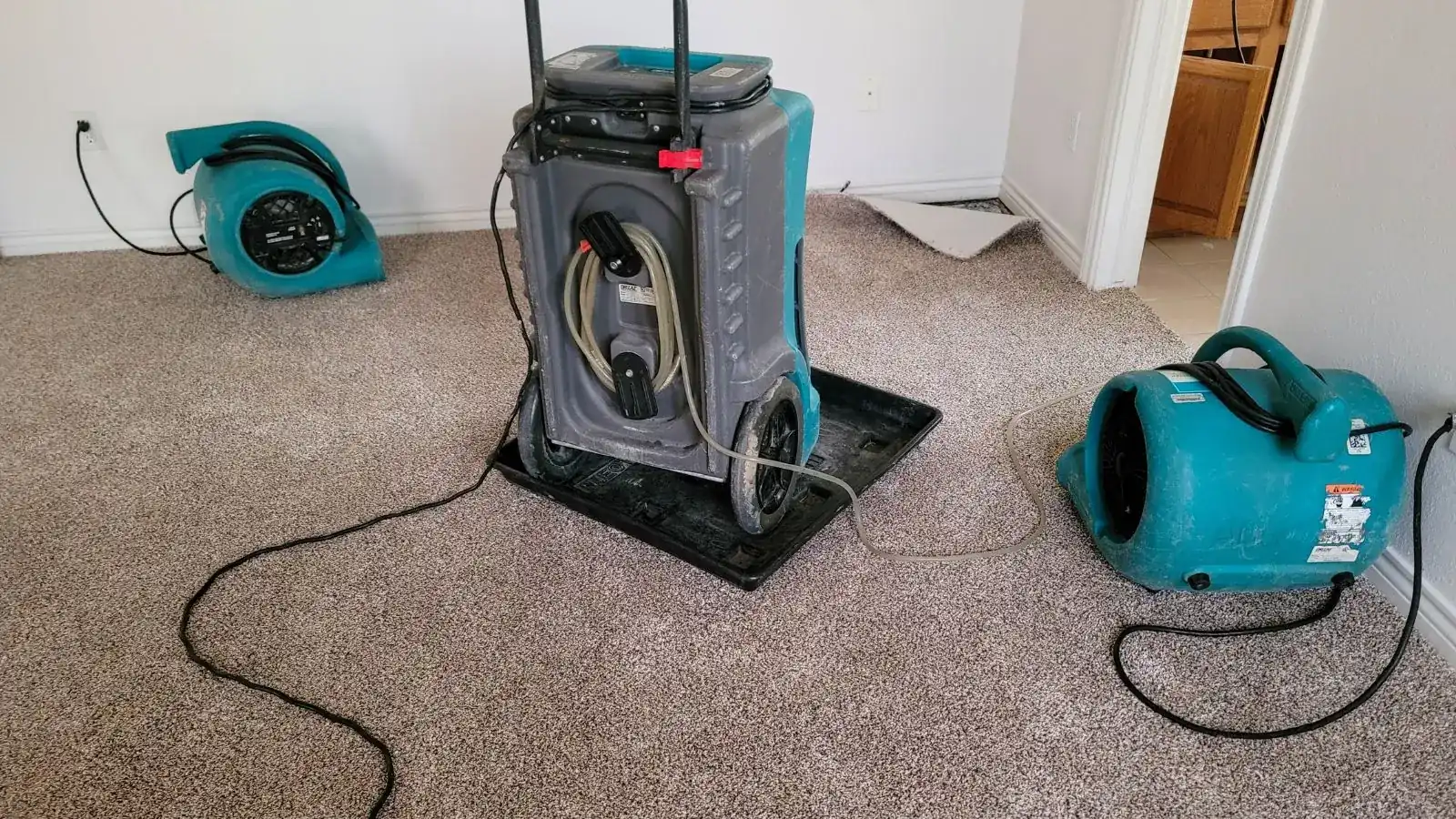
Air movers and LGR dehumidifiers are placed from the moisture map. Some floors use directed drying mats.
Monitor daily
Readings are logged each visit. Equipment moves or stops based on numbers, not guesses.
Still wet after a day?
Wet materials start to fail within days. Call before mold gets a foothold.
Structural drying in detail
Structural drying is the science inside mitigation. Wet air is pulled from the room by dehumidifiers while air movers push fresh dry air across wet surfaces. Together they carry moisture out of drywall, subfloor and framing.
Drying is complete when readings return to the dry standard for that material, not when the surface feels dry. Minor leaks can dry in a few days, while larger losses take longer. Ask the technician how many days to expect and what number ends the job.
Equipment is placed and removed by the crew. Renting out air movers or dehumidifiers without a crew is not offered.
Mitigation or repair: which one do you need?
| Question | Mitigation | Repair |
|---|---|---|
| When does it start? | Right away, within the first 24 to 72 hours | After readings show the structure is dry |
| What is the goal? | Stop spread, dry the structure, save materials | Rebuild what could not be saved |
| Typical tools | Meters, thermal imaging, air movers, dehumidifiers | Drywall, flooring, paint, trim |
| Page to read | This page | Water damage repair |
Documenting for your insurance claim
California Department of Insurance guidance tells homeowners to report damage promptly, take reasonable steps to prevent further damage, photograph the loss and keep receipts. Mitigation records fit that work: moisture logs, equipment lists and dated photos show what the water did and what was done about it.
Sudden and accidental water damage is often covered by a homeowners policy, and gradual leaks and neglect often are not. Flood from outside is usually excluded and needs separate flood coverage. Check your policy or ask your insurer. We cannot promise a claim will be approved or state a payout.
What drives mitigation cost
Water category
Contaminated water adds containment and disinfecting steps.
Square footage affected
More wet area needs more equipment and more drying days.
Materials involved
Hardwood and plaster dry slowly. Drywall and carpet pad often come out.
Drying days
Equipment time depends on readings, not a fixed schedule.
Building layout
Multi-story and condo layouts can carry water between units and floors.
Want your real number? Call dispatch and ask how the scope will be explained before work starts.
Local conditions that change the plan
Laguna Hills gets most of its rain in winter storms. The NWS water-year normal at nearby John Wayne Airport is 11.18 inches, and heavy atmospheric river events such as the January 14 to 16, 2023 storms caused flooding across Orange County. A roof leak during one of those storms should be tracked and dried quickly.
Many homes here belong to HOAs, and multi-unit buildings can share walls and ceilings. If your leak affected a neighbor, tell dispatch so the crew can plan for both units and your HOA's rules.
If the water is already gone but the room smells musty, move to mold remediation. For storm water from outside, see flood damage restoration. Nearby homeowners in Aliso Viejo can call the same line.
What to do while the equipment runs
- Leave air movers and dehumidifiers plugged in and running until the crew says the readings are done
- Keep children and pets out of the wet area and away from cords
- Do not use a household vacuum on standing water
- Call 911 if you smell gas, see sparks or the ceiling is bulging with water
- Write down the date and time you noticed the water for your insurer
Water mitigation FAQs
Yes. Dispatch answers 24/7, including weekends and holidays. A crew is sent the same day when one is available, and the technician explains the scope and how the price is set before work begins.
Mitigation stops the damage and dries the structure. Restoration is the broader job that also covers cleaning and rebuilding. In practice mitigation comes first and repair follows.
Often a few days, but the readings decide. Equipment stays until each wet material reaches its dry goal.
Air movers and dehumidifiers make noise and give off heat as they pull moisture from the air. The crew can place them to limit disruption.
Usually no. Dehumidifiers work best in a closed space, so ask the crew before opening windows.