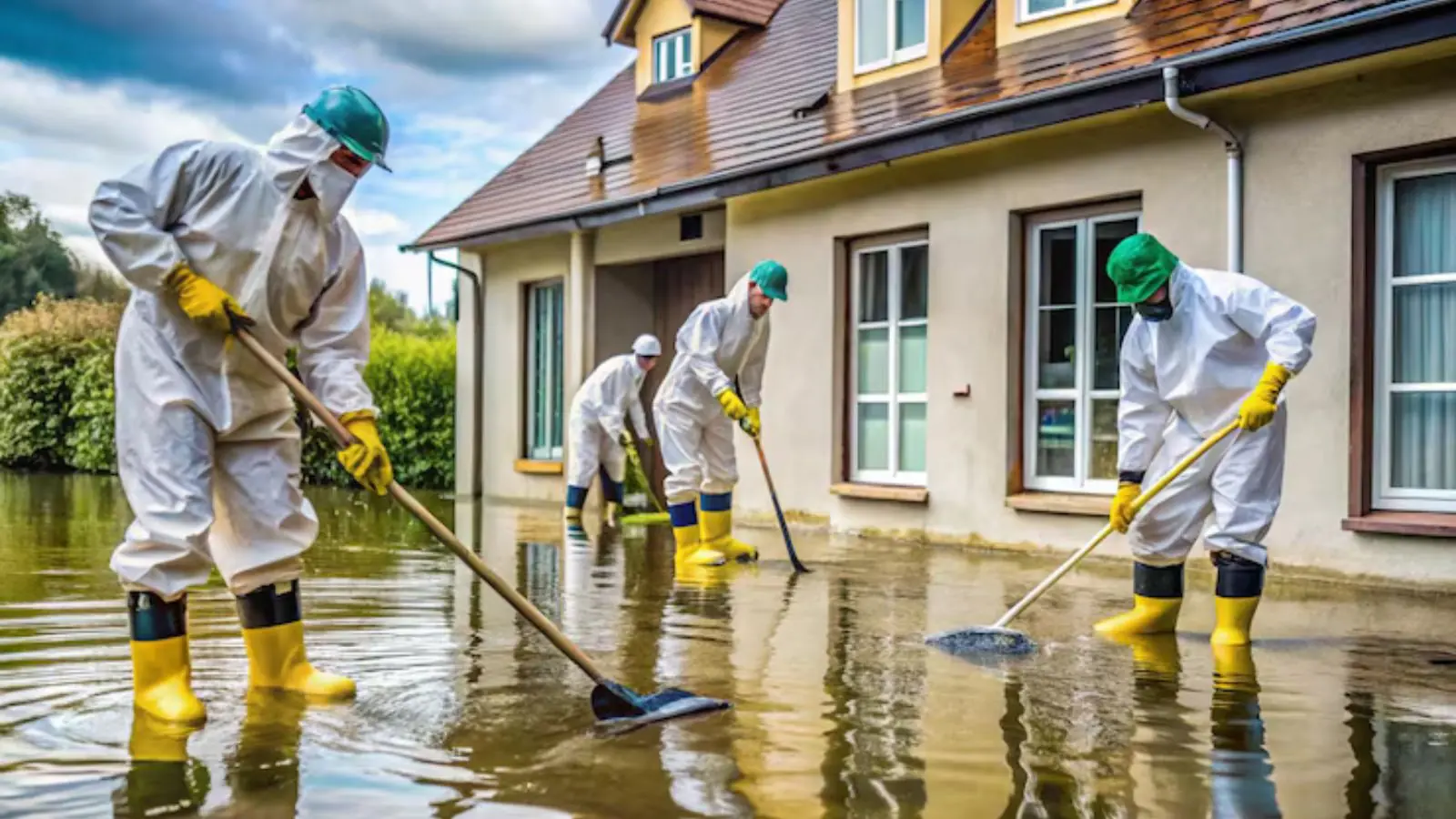
Why the first 48 hours decide the cleanup
Emergency water damage cleanup in Laguna Hills starts once the water source is stopped and the standing water is out. What remains is wet debris, damp contents and surfaces that need sanitizing. Left alone, those things turn into odor, staining and mold.
Call the 24/7 line as soon as you can. While you wait, wear gloves and boots, open doors to the wet room if the weather allows, and move photos, paperwork and electronics to a dry spot. Keep children and pets away from anything touched by gray or black water.
What cleanup actually covers
Debris and ruined materials
Soaked carpet pad, swollen particle board, wet insulation and crumbling drywall are bagged and hauled out so they stop holding water.
Surface cleaning
Hard surfaces are scrubbed with detergent first, then treated with a disinfectant used to its label directions, with dwell time respected.
Contents handling
Furniture, rugs, books and electronics are triaged. Hard goods are cleaned in place or moved out, and porous items are assessed one by one.
Odor control
Odor is tied to moisture and residue. Removing the source material and drying the area usually does more than any spray.
Gray and black water: what to do first
Not all water is equal. Gray water from a washer, dishwasher or overflowing sink with no waste carries bacteria and soap residue. Black water from a sewer, a toilet with solids or ground-surface flooding is heavily contaminated. Categories here follow ANSI/IICRC S500.
For gray or black water, stay out of the room. Do not run fans, do not wade in barefoot, and do not use a household vacuum. If water has reached an outlet, cut power at the panel only if the floor around it is dry, and call 911 or your utility for any electrical or gas concern before you call the restoration line.
Wet for more than a day?
Porous items lose ground fast. Call and ask what can still be saved.
Keep, clean or discard: a practical guide
| Item | Clean water (Cat 1) | Gray or black water (Cat 2 or 3) |
|---|---|---|
| Carpet | Often dried and saved if caught early | Discarded, usually with the pad |
| Carpet pad | Often replaced since it is cheap and holds water | Discarded |
| Drywall | Dried in place if wet briefly, cut out after 72 hours wet | Cut out and discarded |
| Hard furniture | Wiped, dried, checked for swelling | Cleaned and disinfected or discarded |
| Upholstery and mattresses | Dried and cleaned if caught quickly | Discarded |
| Books and paper | Frozen or dried quickly, may be saved | Discarded |
Drywall and insulation that stay wet beyond about 72 hours are generally removed. Photograph each item before it goes in a bag, since your insurer may ask.
How a cleanup visit runs
Walk-through and photos
The technician reviews each wet room, tests moisture and records the damage.
Sort and remove
Materials that cannot be saved are removed. Salvageable items are staged and cleaned.
Clean and sanitize
Surfaces are detergent-cleaned, then disinfected where the water category calls for it.
Dry and deodorize
Air movers and dehumidifiers finish the dry-out, and HEPA air scrubbers can run when odors or dust are an issue. See water mitigation for how drying is verified.
Hand off to repair
Once the rooms are clean and dry, the rebuild is scoped. Details are on the water damage repair page.
Hard water and the residue left behind
El Toro Water District's 2025 water quality report lists its imported supply at 270 mg/L of hardness, about 16 grains per gallon. When clean supply water floods a room and evaporates, minerals can stay behind as a white film on glass, tile and fixtures.
That is normal for water of this hardness, and it is one more reason cleanup includes wiping hard surfaces instead of simply drying them. Which water district serves your address depends on your street, so check your bill.
What affects the cost of cleanup
Water category
Gray and black water need protective gear, disposal and disinfecting.
Volume of debris
More removed carpet, drywall and furniture means more labor and hauling.
Contents involved
Large furniture sets and sentimental items take longer to triage.
Odor and residue
Jobs without a lingering odor source finish faster than ones with one.
Time since the loss
Water that sat for days adds to the work.
Sudden and accidental water damage is often covered by a homeowners policy, and gradual leaks and neglect often are not. Flood from outside generally needs separate flood coverage. Check your policy, keep receipts, and ask your insurer. Want your real number? Call dispatch and describe the room.
Cleanup across the Laguna Hills area
Many homes in Laguna Hills and neighboring cities sit in HOA communities where a leak in one unit can reach another. Tell dispatch if a neighbor is affected so the crew can plan access.
If the water came from outside, the work moves into flood damage restoration. If it came from a pipe or a hose, emergency water removal covers the first hours. We reach Mission Viejo, Lake Forest and the rest of South Orange County from the same line.
Water damage cleanup FAQs
Yes. Dispatch is open 24 hours, including weekends and holidays. A crew is sent the same day when one is available, and dispatch will tell you what to move or avoid while you wait.
Often yes for a small clean-water spill. Use detergent, dry it fast and watch for odor. If the water was gray or black, or if more than a thin layer spread, call a crew.
Find and remove what is still wet. Odor usually comes from damp pad, drywall or insulation. Once those are out and the room is dry, the smell fades. Masking sprays do not fix a wet source.
We triage it with you. Hard furniture is often cleaned in place. Upholstery and mattresses touched by contaminated water are usually discarded. Photograph items before anything is removed.
Photograph and list them, and ask your adjuster before throwing out anything large or valuable. California Department of Insurance guidance advises photographing damage and keeping receipts.