What water damage repair means after a leak
Water damage repair in Laguna Hills is the rebuild phase. It starts after the water is removed and the structure is dry, and it replaces what could not be saved: ceiling drywall, wall board, insulation, flooring, baseboards and paint.
That order matters. Repair on top of damp framing traps moisture and invites mold, so crews confirm dry readings first. If the house is still wet, the right first step is water mitigation, which stops the spread and sets drying equipment.
Once drying is documented, the repair scope can be written down, priced and approved. You decide what gets rebuilt, in what order, and how closely new finishes should match the old ones.
Repair work by material
Drywall and ceilings
Wet or stained board is cut back to dry, solid material, patched, taped, textured and primed. Ceiling sections that sag or hold water are removed entirely.
Flooring
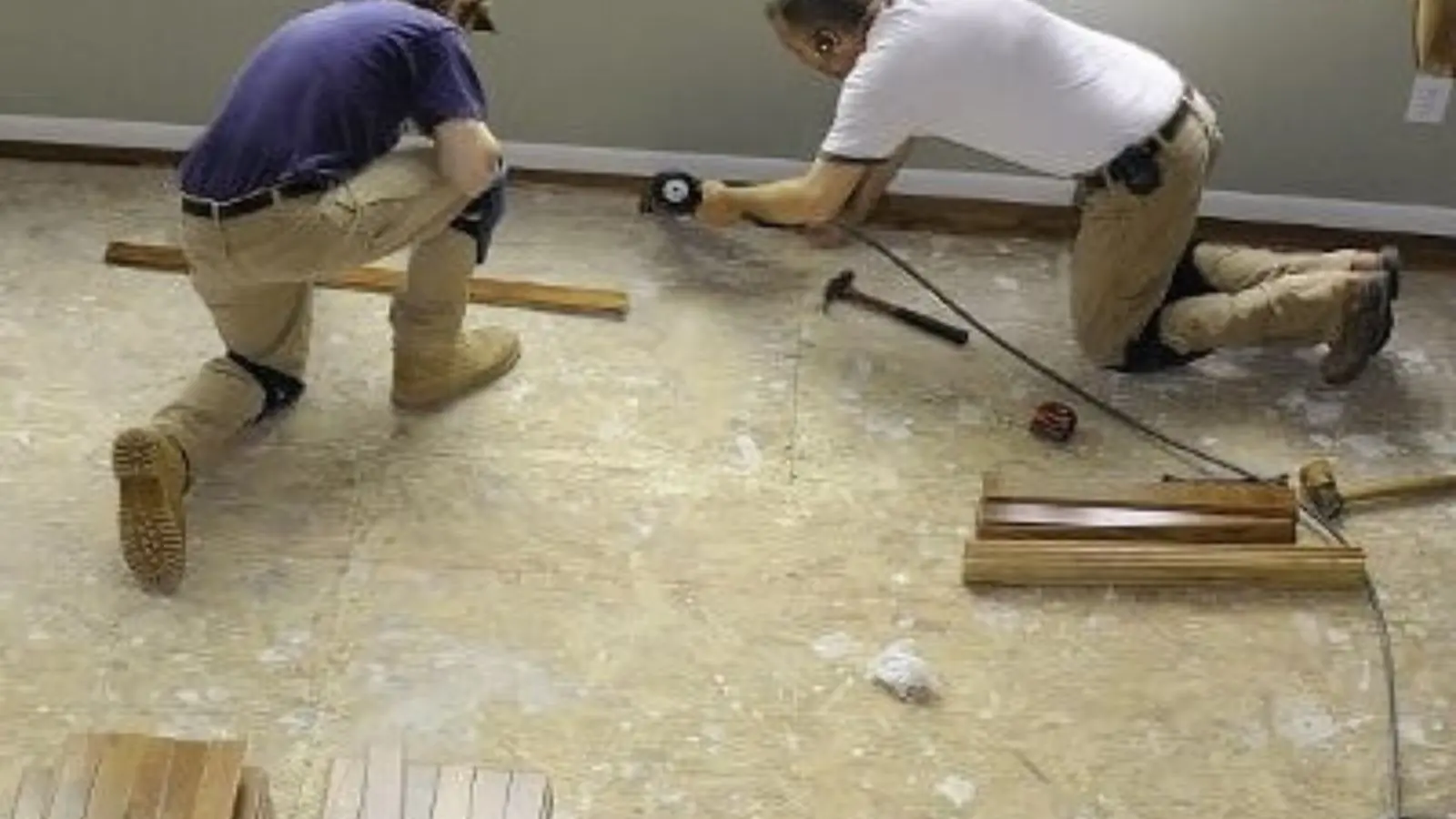
Carpet and pad, laminate, vinyl plank, tile and hardwood each fail differently. Some can be dried in place, others are pulled and replaced once the subfloor reads dry.
Insulation and framing
Wet insulation loses its value and holds moisture against studs. It is removed and replaced after framing meets drying goals.
Paint, trim and cabinets
Baseboards, casing and toe kicks that swelled are swapped out. Stain-blocking primer goes on before the finish coat so old tannin or rust marks do not bleed through.
Ceiling and wall water damage repair
A brown ring on a ceiling is a symptom, not the problem. Typical sources in two-story Laguna Hills homes are an upstairs toilet or tub supply line, an air handler condensate line that backs up, or a roof leak that tracks along a rafter before it drips.
Repair begins with finding that source and confirming it is fixed. The technician probes the stain with a moisture meter, checks for a wet cavity with a thermal camera, and opens the ceiling where readings stay high. Soft or sagging drywall is cut out in squares that reach solid framing.
New board is hung, taped and textured to blend with the room. Painting a stain without those steps only hides it for a season, so ask for dry readings in writing before the patch goes up.
Stain on the ceiling again?
A stain that returns means the source is still active. Call before anything gets painted.
Hardwood and laminate floors after a leak
Cupping shows up when board edges sit higher than the center, usually because moisture reached the underside. Many cupped floors flatten again as they dry slowly, so sanding early can lock in a problem and cut the board thinner than it needs to be.
The decision is made with moisture readings, not appearance. If boards and subfloor reach normal readings and the surface relaxes, refinishing may be enough. If boards are buckled, split or still wet after drying, replacement of the damaged run is the better call.
Repair or replace: a quick decision guide
| Material | Often repaired when | Often replaced when |
|---|---|---|
| Ceiling drywall | Small stain, board is firm and dry | Sagging, soft, or wet for more than 72 hours |
| Wall drywall | Wet only at the bottom, wicking stopped | Swollen, crumbling, or paper face is peeling |
| Carpet | Clean water, dried within a day or two | Contaminated water or pad stayed wet |
| Hardwood | Mild cupping that relaxes as it dries | Buckled, split or still wet after drying |
| Baseboard and trim | Painted wood that is not swollen | Swollen MDF or finger-jointed trim |
These are starting points, not promises. Final calls follow moisture readings and an in-person look.
Confirm these before repair starts
- The leak is stopped and the plumber or roofer has repaired the source.
- Moisture readings for framing and subfloor are recorded as dry.
- The written scope lists each room, the materials, and how the price is set.
- Your insurer has seen photos, and the adjuster has approved or waived the walkthrough if a claim is open.
- You have asked the city whether the work needs a permit. Laguna Hills Building and Safety is at the Civic Center, 24035 El Toro Road, and permit rules vary by scope.
What drives the price of repair
No one can price a rebuild from a phone description. These five factors set the number, and the written scope shows each one.
Size of the affected area
A single ceiling patch and a full room of drywall are very different amounts of labor and material.
Materials and finishes
Textured ceilings, hardwood, tile and custom cabinets cost more to replace and match.
Access and height
High ceilings, stairs and tight crawl spaces add setup time.
Drying results
Materials that dried well are saved. Materials that stayed wet are replaced.
Permits and inspections
Larger structural or electrical work may need city review before walls close.
Insurance scope
Your policy sets what is covered, so the adjuster's scope and ours should be compared line by line.
Sudden and accidental water damage is often covered, and gradual leaks often are not, so check your policy or ask your insurer. We cannot promise approval. Want your real number? Call dispatch at (949) 670-0939.
Repairing homes across Laguna Hills
Homes here span several building eras. The Moulton Ranch was subdivided in the early 1960s, and later tracts and annexed areas such as North Laguna Hills (annexed July 1, 1996) and the Westside (annexed September 18, 2000) came on in other decades. Older finishes can be hard to match, so ask for a texture sample before the ceiling is closed.
The city's Safety Element also lists expansive soils in the area. A hairline crack near a stain may come from soil movement rather than a leak, and the fix is different. We look at both before quoting.
If water is still coming in right now, jump to emergency water removal. If you are across town, we also repair homes in Mission Viejo and Laguna Woods.
Before the crew arrives for repair work
- Keep the circuit off for any room where ceilings or outlets got wet
- Do not paint over a stain until dry readings are documented
- Photograph the damage and keep damaged material until your insurer has seen it
- Ask whether a permit applies, and check with Laguna Hills Building and Safety at (949) 707-2600
- Ask for the scope and price in writing before work starts
The standard behind the drying step
Professional drying follows the published ANSI/IICRC S500 standard for water damage restoration. You do not need to read it, but you can ask the crew which readings will show that framing and subfloor are dry before anything is closed up.
Water damage repair FAQs
As soon as framing, subfloor and drywall read dry and the leak source is fixed. That can be a few days after drying equipment starts, and your technician will confirm with readings.
Usually close, yes. Texture styles vary and older finishes can be hard to match exactly. Ask for a sample patch and compare it in daylight before the full room is finished.
It depends on scope. Cosmetic repair and structural, electrical or plumbing work are treated differently, so ask the city. Laguna Hills Building and Safety is at 24035 El Toro Road and can be reached at (949) 707-2600.
If the damage was sudden and accidental, a homeowners policy often responds. Gradual leaks and neglect often are not covered. Check your policy or ask your insurer, and keep photos and receipts.
Repair is planned work, but the 24/7 line is open if a ceiling is actively dripping or a repaired area starts leaking again. Dispatch will send a crew the same day when one is available.