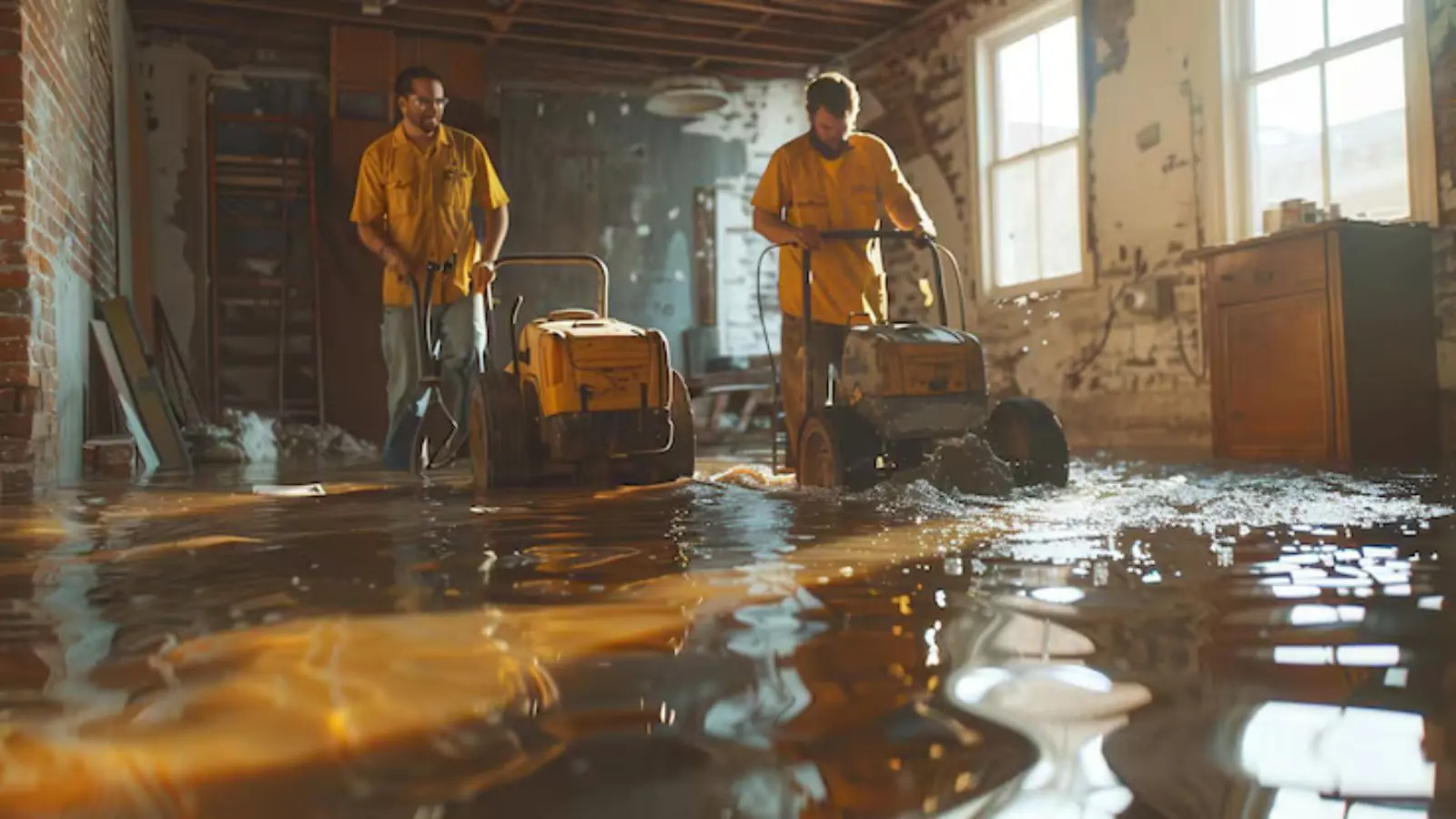
When standing water is an emergency
If water is pooling on the floor, dripping through a ceiling or rising from a drain, treat it as an emergency. This line is open 24/7, and emergency water removal in Laguna Hills starts with a call that tells the crew what kind of water, how much and where.
While you wait, stop the source if it is safe. Turn off the main water valve, lift valuables and electronics off the floor, and keep children and pets out of the water. If water touches an outlet or panel, stay out, cut power only if you can reach the panel dry, and call 911 or your utility before the restoration line.
Crews arrive with truck-mounted or portable extraction units, submersible pumps and wet vacuums. We do not promise an arrival time, but same-day response is offered when a crew is available.
How water extraction works
Find and stop the source
The crew confirms the shut-off, checks the supply line or drain that failed, and makes the area safe to enter.
Pump and extract
Submersible pumps move deep water. Extraction wands pull water from carpet, pad and hard flooring.
Remove what cannot dry
Soaked carpet pad, wet insulation and swollen baseboards come out so they cannot hold water against the structure.
Hand off to drying
Remaining moisture is mapped and drying equipment is set, which is the work of water mitigation.
Pipe still running?
Shut the main valve, then call. Every minute of flow adds to the cleanup.
Burst pipe water damage: the first hour
A burst supply line can release gallons per minute, and a pinhole leak inside a wall can run for days before a stain appears. Common culprits in older homes are corroded supply lines, failed fittings and water heater connections.
In the first hour, shut the main valve, open a faucet at the lowest point of the house to drain lines, and turn off the water heater if it is leaking. Photograph everything before you move it. Then call dispatch and ask the technician to meet you at the wettest room first.
Other emergencies we extract
Washing machine and appliance floods
A failed fill hose or dishwasher line can soak a whole floor, including the room below. Extraction starts in the source room and follows water into neighbors.
Toilet and tub overflows
Clean overflow is a Category 1 job. Overflow with waste is Category 2 or 3 and requires gloves, containment and disinfecting.
Roof and window leaks in storms
Winter storms can send rain through flashing and vents. Rain through a roof is typically clean at first, but it picks up dirt and contaminants as it moves.
Crawl space and garage water
Water that collects under a raised floor or in a garage needs pumps and a plan to dry what it touched.
What gets done on site, by water type
| Situation | Water type | Typical first actions |
|---|---|---|
| Supply line burst | Category 1 | Shut off water, extract, pull wet pad, set drying |
| Dishwasher or washer discharge | Category 2 | Extract, remove porous materials, sanitize |
| Sewage backup | Category 3 | Stay out, call 24/7 line, containment, extraction, disinfecting |
| Rain through roof | Category 1, may degrade | Tarp if safe, extract, check insulation and ceiling |
Water categories follow the framework in ANSI/IICRC S500. Ask any company whether its crews work to that standard.
Equipment, in plain words
Extraction units and submersible pumps move bulk water. Moisture meters show how wet a material really is. Thermal imaging cameras reveal cool, wet areas behind drywall. After extraction, air movers push air across surfaces and dehumidifiers pull water out of the air so the rest can evaporate.
Drying equipment comes after extraction, and renting it out without a crew is not part of this service. Technicians set it up, check it daily and remove it when readings say the structure is dry.
What affects the cost of emergency removal
Water category
Clean water costs less to handle than gray or black water.
Depth and area
More square feet and more depth mean more extraction time.
Materials involved
Carpet, pad, hardwood and drywall are handled differently.
Time since the loss
Water left overnight spreads, so the dry-out takes longer.
Your policy decides what is covered. Sudden pipe bursts are often covered, while flood from outside usually needs a separate policy. Want your real number? Call dispatch and explain the scene.
Emergency removal across South Orange County
We reach homes along I-5, El Toro Road, Alicia Parkway and Moulton Parkway. Call from Lake Forest, Laguna Niguel or anywhere nearby and dispatch will confirm coverage by address.
Once standing water is gone, the next questions are what is wet behind the walls and whether anything must be torn out. That is covered in flood damage restoration for outside water and water damage cleanup for removing and sanitizing what remains.
Emergency water removal FAQs
Yes. The dispatch line is answered 24 hours a day, including weekends and holidays. A crew is sent the same day when one is available, and dispatch will tell you what to do first.
No. California Department of Insurance guidance says to take reasonable steps to prevent more damage and to keep your receipts. Photograph everything first, then start extraction.
For a small clean spill, yes. For anything deeper than a thin film, or if the water is gray or black, call a crew. Wet vacuums do not pull water from pad or framing.
Call dispatch and your water utility. Water districts that serve Laguna Hills include El Toro Water District and Moulton Niguel Water District, and which one serves your address depends on the street.
Assume it is not if it came from a sewer, a toilet with waste, a creek or the ground surface. Stay out, and call the 24/7 line.