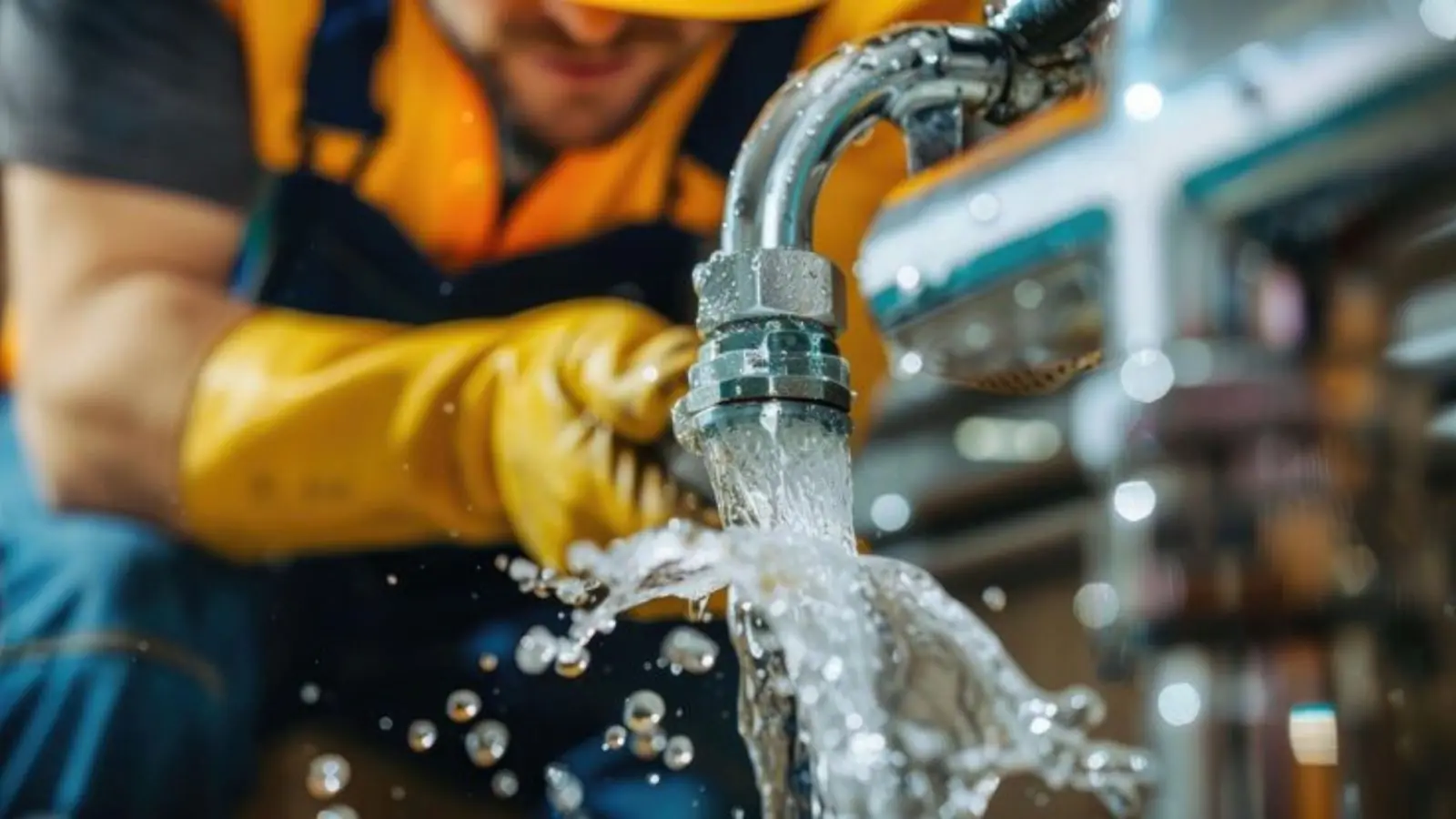
Shut it down in this order
Turn off the heater first, then stop the water feeding it. Stay clear of the water coming out, since it can be scalding.
A slow weep from a fitting and a failed tank are different problems, but the first steps are the same. After that, a plumber decides whether to repair or replace, and a restoration crew handles what the water touched.
Water heater leak checklist
- Electric heater: switch off its breaker at the panel, if the panel is dry and you can reach it safely
- Gas heater: turn the gas control to "off" or "pilot," and if you smell gas, leave and call 911
- Close the cold-water inlet valve on top of the heater, a handle or wheel on the pipe feeding it
- Do not touch the hot water, the relief valve discharge, or the pipes above the tank
- Open a hot tap elsewhere in the house to relieve pressure after the inlet is closed
- Move boxes, tools and stored items off the floor
- Photograph the heater, the label and the wet area before cleanup
- Call a plumber for the heater, and dispatch for the water
Water spreading from the closet?
Call (949) 670-0939 for 24/7 dispatch while you shut the heater down.
Where the water actually goes
Heaters sit in garages, closets and utility rooms, so the damage follows the building around them.
Garage slab
Concrete is forgiving, but water can slip under the wall plate and wick into the bottom of garage drywall and stored boxes.
Closet or interior utility room
Water crosses into adjoining carpet or hardwood within minutes. Baseboards and the base of drywall absorb it first.
Upper-floor or attic heaters
Water drips through ceilings below. Wet ceiling drywall can sag and needs prompt attention.
Behind and under the tank
The drain pan, insulation and flooring under the heater stay wet longest and are easy to miss.
Cleanup steps after the leak is stopped
Remove standing water
A wet vacuum works for a small spill. Larger spills need extraction units that pull water from carpet and pad.
Pull wet baseboards if they are soaked
Taking them off lets the wall bottom dry. Check behind them with a moisture meter, not just by touch.
Dry the structure
Air movers, LGR dehumidifiers and sometimes cavity drying are set up. Hardwood needs slow, controlled drying rather than a space heater.
Handle contents and storage
Cardboard boxes, paper and fabric do not recover well. Photograph items before you discard them.
Confirm dry readings
A crew logs readings until walls and floors match dry reference points, and then repairs can start.
The EPA advises drying within 24 to 48 hours to prevent mold. Drywall and insulation that stay wet more than 72 hours are generally removed.
Slow weep or full failure: how to tell
A slow weep often comes from a fitting, the relief valve line or the drain valve. You may see a damp ring on the pan or a rust trail down the side. A tank that has failed from corrosion tends to leak from the bottom or the seam, and it usually gets worse quickly.
Either way, shut the heater down and call a plumber. A stained pan, rust on the floor or a puddle that returns after you wipe it should all be treated as a leak, not a nuisance.
Things that go wrong
The most common mistake is stopping at the mop. A garage floor looks dry in an hour while the wall behind the heater stays wet for days. A moisture meter and a thermal imaging camera catch what the eye does not.
Another mistake is leaving the heater on while the tank is empty. An electric element can burn out, and a gas burner should not run dry. Turn it off at the control and leave the tank to a plumber.
Laguna Hills: replacement and permits
The shutoff steps above are general technique and apply to most tank heaters. For the replacement, ask Laguna Hills Building and Safety whether replacing a heater needs a permit. The office is at the Civic Center, 24035 El Toro Road, and the phone is (949) 707-2600.
Ask the plumber to handle that question up front and confirm it in writing. We make no claims about specific code requirements, so use the city as your source.
What to tell the crew on the phone
Say where the heater is, whether the water is off, and which rooms touch the garage or closet. Mention flooring types and whether the leak ran overnight. Those details tell dispatch which equipment to bring.
Have the heater's label photographed, since the plumber will want the size and fuel type. Keep the plumber's invoice and your photos together for any claim.
Next steps
Call a plumber for the heater and dispatch for the water. Emergency water removal gets extraction started, and water mitigation covers the drying that follows. Nearby crews also serve Laguna Niguel and Laguna Woods.
Call (949) 670-0939 and tell dispatch where the heater sits. Do not try to carry a full tank yourself.
Water heater leak questions
Stay clear of the hot water and the pipes above the tank. Turn off power or gas, close the cold inlet, and let a plumber handle the unit.
Turn off power or gas to the heater first, then close the cold-water inlet. For gas smells, leave and call 911.
The EPA says mold can begin when areas stay wet beyond 24 to 48 hours. Wall bases and boxes are the usual problem spots.
Concrete usually dries on its own, but the walls, wall plates and stored items nearby may stay wet. A moisture meter shows what remains.
Ask Laguna Hills Building and Safety at (949) 707-2600 whether replacing a heater needs a permit. We do not make code claims.
Policies typically treat sudden failures differently from slow leaks. The heater itself may not be covered. Read your policy and call your insurer.