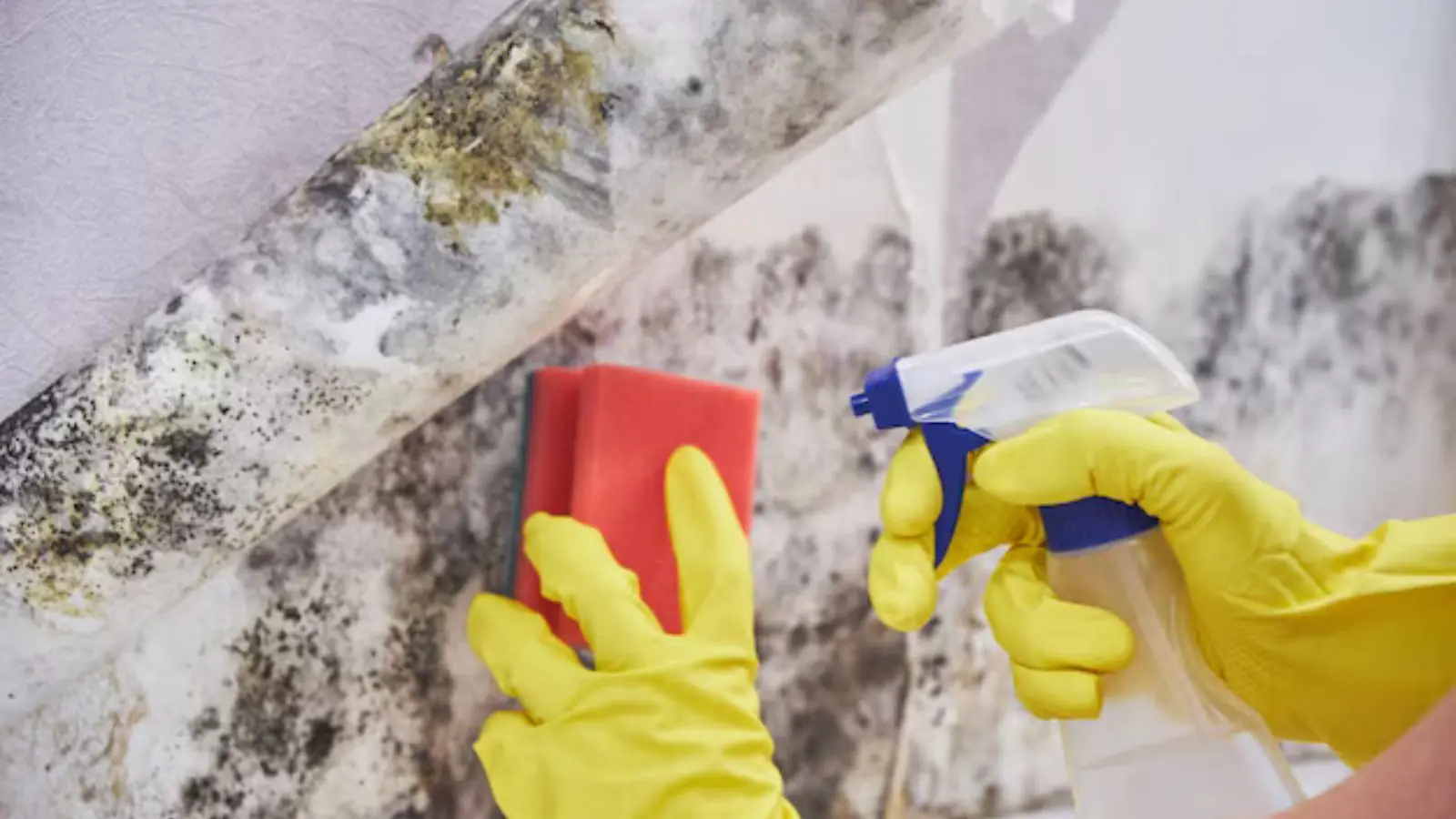
What the agencies say works
There is no magic spray. The EPA states that the key to mold control is moisture control, and it does not recommend routine biocide use. The CDPH tells people to scrub hard surfaces with a non-ammonia detergent and hot water, then dry them.
Bleach has a narrow role. The CDPH allows a 10 percent bleach solution only after cleaning, left on for about 10 minutes, and never mixed with ammonia. The EPA also warns that dead mold can still cause allergic reactions, so killing it is not the same as removing it.
Surface by surface
This table does not name brands. Labels differ and change, so judge by the surface and the method.
| Surface | What works | What does not |
|---|---|---|
| Glazed tile and grout | Non-ammonia detergent, hot water, stiff brush, thorough drying. Diluted bleach after cleaning if you choose | Spraying over soap scum without scrubbing, leaving the grout damp |
| Sealed concrete and metal | Detergent and hot water scrub, then drying with a fan or dehumidifier | Painting over residue |
| Sealed or finished wood | Detergent wash and a dry rag, then full drying | Soaking the wood or sanding without protection |
| Unfinished wood and framing | Careful cleaning for surface growth, HEPA vacuum and professional assessment for deeper staining | Spray-and-forget products that leave the wood wet |
| Drywall, ceiling board, insulation | Removal and replacement after the source is fixed | Scrubbing, bleaching or painting over |
| Carpet, pad, upholstery | Removal in most cases per CDPH porous guidance | Steam cleaning or fragrance covers |
If a surface appears in the last two rows, the cleaner is not the issue. The material has to go.
Cleaned it twice already?
Repeat growth points to a water source nobody has found. Call the 24/7 line.
A simple home method
Fix the water first
Repair the leak, seal the gap or run a dehumidifier. Any cleaning before this step is temporary.
Gear up
N95 respirator, gloves, goggles and old clothes. Close the door and open a window only if no more than 48 hours have passed since flooding, because the CDPH advises against running fans after that.
Scrub, do not spray and walk away
Mix non-ammonia detergent with hot water, scrub the surface and rinse with a damp cloth. Seal the cloths in a bag.
Dry completely
Use air movers or a dehumidifier. A moisture meter reading on wood or drywall tells you more than the surface feel.
Bleach only if you choose, and only after cleaning
Use the 10 percent ratio, leave it about 10 minutes and ventilate. Never combine it with ammonia or any other cleaner.
Why shelf claims deserve caution
Labels promise to kill 99 percent of this or block that for months. None of it replaces drying the material, and none of it makes a soaked board sound again.
The EPA does not recommend routine biocide use, and the reason is practical: a chemical on a damp surface does not stop the next round of growth. Fumes in a closed garage or bathroom add a risk of their own, so ventilate and never combine products.
Treat any product as a cleaning aid at most. The work that counts is the water repair, the scrubbing, the removal of porous material and the drying that follows.
Why the stain keeps coming back
A patch that returns in the same spot usually has a hidden moisture source: a weeping supply line, a leaking shower pan, condensation on a cold wall or a roof leak. Repeat cleaning treats the symptom.
Agencies also caution against painting over mold, and the CDPH Mold Booklet says doing so lets it return. Stain-blocking primer has its place, but only on clean, dry material.
If you have wiped the same spot twice, stop and look for the water. A moisture meter, a thermal imaging camera or a plumber with a leak detector can find it faster than another bottle of cleaner.
When products stop being the answer
Move to professional help when:
- The growth covers more than about 10 square feet, and the CDPH says to call an experienced contractor above 100 square feet.
- Drywall, insulation or carpet is involved. Those are generally discarded, and the wet cavity behind needs inspection.
- The source is unclear or inside a wall.
- Someone in the home is in a CDPH higher-risk group. Ask a physician about health concerns.
- The mold followed sewage or ground-level flooding, which is a water damage cleanup job first.
Crews handle bigger jobs with containment barriers, HEPA vacuums and negative air machines. See our mold remediation page for how that works.
Equipment that does the job better than a spray
A moisture meter confirms whether wood or drywall is actually dry. A dehumidifier pulls humidity out of a closed room, and an air mover keeps air moving across a wet surface.
For larger work, crews add HEPA vacuums, HEPA air scrubbers and negative air machines so loosened material is captured instead of spread. None of that is sold in a spray bottle, which is why bigger jobs go to a crew.
Laguna Hills: hiring help and permits
If you hire a crew, verify the contractor at cslb.ca.gov or call (800) 321-2752. California requires a license for work worth $1,000 or more in labor and materials, and for any job that needs a permit. Ask what mold training the crew has.
The CSLB also caps a down payment at the lesser of 10 percent or $1,000 in most cases. Cutting out drywall is cleanup, but framing or structural repairs may be a different matter. Call Laguna Hills Building and Safety at (949) 707-2600 and ask whether the scope you were quoted needs a permit.
Next steps
Keep receipts and photos. If a crew is on the way, ask whether they follow the published ANSI/IICRC S520 standard for mold.
Dispatch also covers nearby towns such as Laguna Niguel and Lake Forest. Call (949) 670-0939 any time.
Mold product questions
The CDPH allows 10 percent bleach on hard surfaces only after cleaning, with about 10 minutes of contact. The EPA does not recommend routine biocide use. Bleach does little for porous materials, which are generally discarded.
No. The CDPH says never mix bleach with ammonia. Use one product at a time and rinse between them.
The agencies cited here do not endorse it. They name detergent and hot water, then drying. Whatever you use, the moisture source must be fixed.
The EPA says dead mold can still cause allergic reactions, so it should be removed, not just killed. Ask a physician about health concerns.
We do not name brands. Choose by surface and method: non-ammonia detergent, hot water and drying.
Verify the CSLB license at cslb.ca.gov or (800) 321-2752, get a written contract and keep any down payment to the lesser of 10 percent or $1,000. Ask what mold training the crew has.