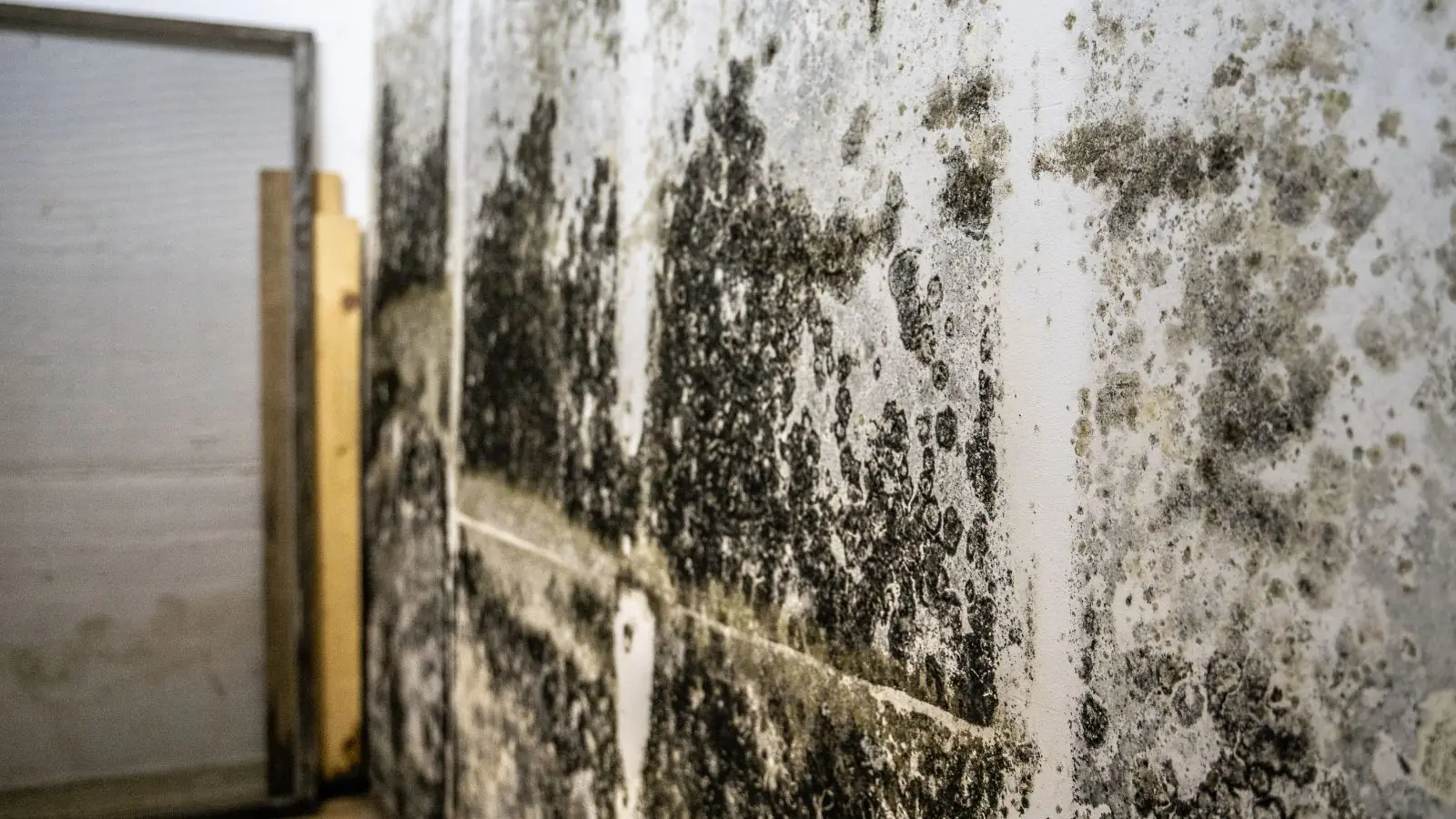
Short answer: moisture first, then size the patch
Mold needs moisture, so removal only works when the water source is fixed first. Wiping a wall while a pipe still drips just gives the patch a reason to return.
After the source is handled, the size of the growth sets the plan. The EPA says patches under about 10 square feet are often a homeowner job, and the CDPH tells people to call an experienced contractor above 100 square feet. Anything in between deserves a careful look at what the surface is made of.
Most Laguna Hills homes have no basement, so this guide covers the places mold actually turns up here: the garage, closets, crawl spaces and sunken or ground-level rooms.
Where mold hides in homes without a basement
The same pattern repeats. A hidden moisture source, a surface that stays damp, and nobody looking for weeks.
| Location in the home | Usual moisture source | Homeowner or professional |
|---|---|---|
| Garage walls and slab edge | Water heater drip, wet-weather seepage at the wall base, stored cardboard soaking up damp | Homeowner if under 10 sq ft on sealed concrete or painted drywall. Professional if drywall is soft |
| Closet backing an outside wall | Condensation on a cold wall, a slow plumbing leak in the next room | Homeowner for a small spot on a hard surface. Professional if the drywall or baseboard is damp |
| Closet or cabinet under a sink wall | Supply line or drain seep that never dripped on the floor | Professional once the wall cavity is wet |
| Crawl space | Poor drainage, plumbing leaks, damp soil under the floor | Professional in most cases because of access, insulation and framing |
| Sunken or ground-level room | Rain pushing against a slab or retaining wall, floor-level seepage | Professional if carpet, pad or wall base stayed wet |
| Bathroom-adjacent storage | Shower pan or tub leak behind the wall | Professional because the source is inside the wall |
If you are unsure which row fits, treat the patch as the symptom and look for the wet spot behind or below it.
Patch bigger than a doormat?
Past roughly 10 square feet, agencies point to professional guidance. Call the 24/7 line.
What a homeowner can handle
This sequence follows the CDPH three steps: fix the water source, dry or remove damp material, then clean or remove the mold.
Find and stop the water
Check supply lines, the water heater, the roof edge and the slope of the ground outside. A moisture meter reads damp drywall and wood, and a flashlight at a low angle shows stains on the wall base.
Protect yourself
Wear an N95 respirator, gloves and goggles. Keep the door closed to the rest of the house and do not dry-brush a patch, which throws dust into the air.
Remove what cannot be cleaned
The CDPH says porous items such as drywall, carpet and upholstered furniture are generally discarded. Cardboard boxes with mold go in a sealed bag.
Scrub hard surfaces
Use a non-ammonia detergent and hot water on concrete, sealed wood, metal and tile. Dry the area fully afterward, with a dehumidifier if the air feels heavy.
Watch it for a few weeks
Check the same spot after rain and after a few warm, humid days. A returning stain means moisture is still arriving.
The EPA advises drying water-damaged areas within 24 to 48 hours, which is why speed matters after any leak.
Porous or non-porous: what stays and what goes
Concrete slab, glazed tile, metal shelving and sealed plastic bins can usually be cleaned. Unfinished wood and stud framing sit in a gray zone and depend on how deep the growth goes.
Drywall, insulation, carpet and cardboard soak up moisture and hold growth below the surface. Those are the materials agencies generally say to discard.
Painting over a patch hides it for a while. The CDPH Mold Booklet notes that painting over mold lets it return, so paint comes last, after the area is dry and clean.
When to call a crew instead
Call for help if any of these are true:
- The patch is larger than about 10 square feet, or you keep finding more as you open the wall.
- Drywall or insulation is soft, sagging or wet to the touch.
- The moisture source is inside a wall, under a slab or in a crawl space you cannot reach safely.
- The water came from a sewage backup or ground-level flooding, which is a different job covered under water mitigation and cleanup.
- Someone in the home has asthma, a weakened immune system, or is an infant or older adult. The CDPH lists these groups as higher risk, and a physician is the person to ask about health questions.
A mold crew works with containment barriers, negative air machines and HEPA air scrubbers so spores are not pulled into the rest of the house. For the full process, see our mold remediation page.
Laguna Hills: check drainage near the creek corridors
The City Safety Element notes shallow groundwater, about 5 to 10 feet down, along Sulphur, Aliso and Oso Creeks, and it flags expansive soils that can damage structures. For crawl spaces and ground-level rooms near those corridors, that means checking drainage: does water pool beside the foundation, do downspouts empty near the wall, and does the crawl space smell or feel damp after rain.
The same document describes expansive soils that can cause minor to severe structural damage. Cracks at a slab edge or a stuck door are worth photographing, because they can give water a path into a wall base.
Size guidance is simple to remember. The EPA 10 square foot figure marks the edge of a typical homeowner job, and the CDPH 100 square foot figure is where it says to call an experienced contractor. If your patch sits between them, get professional guidance before cutting anything open.
Next steps if you found mold today
Take photos with something for scale, such as a tape measure. Note where the patch sits, what is behind it and what sits on the other side of the wall.
If a crew is needed, ask whether the company works to the published ANSI/IICRC S520 standard for mold remediation, and verify the contractor license at cslb.ca.gov. Dispatch also covers nearby towns, including Mission Viejo and Lake Forest.
Call (949) 670-0939 any time, day or night. Dispatch will ask where the patch is, how big it looks and whether water is still arriving.
Garage, closet and crawl space mold questions
Often yes for a small patch on a hard surface. The EPA treats under about 10 square feet as typically a homeowner job. Fix the moisture source first, wear a respirator and gloves, scrub with detergent and hot water, then dry the area completely.
The CDPH allows 10 percent bleach only after cleaning, with about 10 minutes of contact, and never mixed with ammonia. The EPA does not recommend routine biocide use. Detergent and hot water come first.
No. The CDPH Mold Booklet says painting over mold lets it return. Fix the moisture, remove or clean the growth, dry the surface, then paint.
The CDPH says spore-count testing is not a first step. Finding and fixing the water source matters more, and a visible patch already tells you moisture is present.
A musty smell points to moisture somewhere nearby, often a damp wall or a slow leak. Check the wall base with a moisture meter if you own one, or call dispatch to describe it.
The City Safety Element reports shallow groundwater, about 5 to 10 feet, along Sulphur, Aliso and Oso Creeks. Homes near those corridors should check drainage around crawl spaces and ground-level rooms. It does not mean every home has a problem.