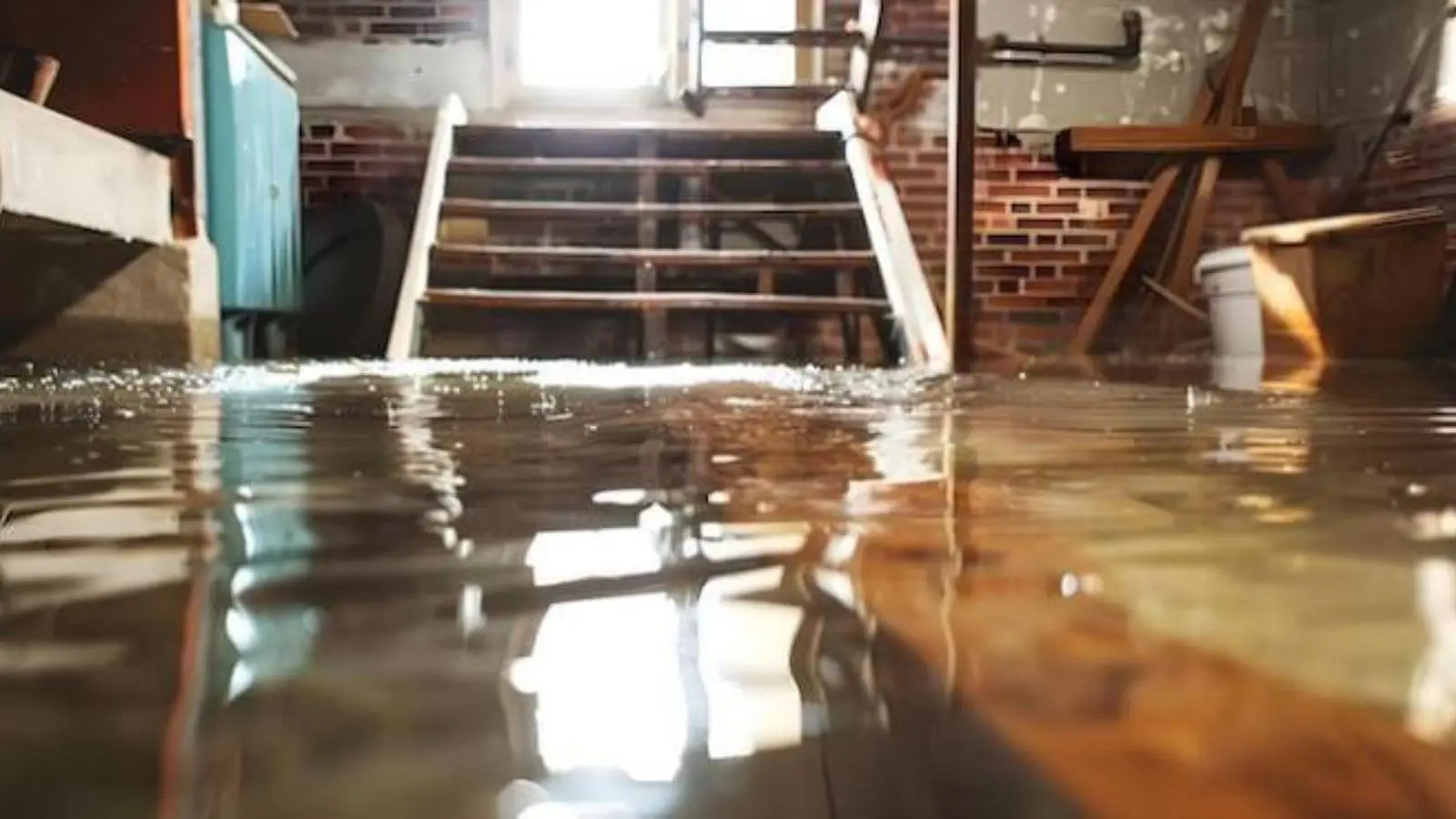
What "lower level" means in Laguna Hills
Most Laguna Hills homes have no basement, so this guide covers the places storm water actually collects here: attached garages, sunken living rooms, split-level lower floors, laundry rooms at slab level, and the base of walls that meet a patio or planter.
Water gets into these spaces from outside. It comes under a door, through a foundation crack, across a garage threshold, or up from a floor drain. That outside origin matters because it changes how the cleanup is done.
Find the water category first
Based on IICRC S500 categories, restoration crews sort water by contamination level. The category sets the gear, the protective equipment and what can be saved.
| Category | What it means | Typical source | What usually happens to materials |
|---|---|---|---|
| Category 1 (clean) | Water from a sanitary source | Broken supply line, clean rain through a roof leak | Often dried in place if acted on quickly |
| Category 2 (gray) | Significant contamination | Washer or dishwasher discharge, Category 1 left standing too long | Carpet pad is usually removed, hard surfaces cleaned and dried |
| Category 3 (black) | Grossly contaminated | Sewage, ground-surface flood water entering from outside | Porous materials removed, structure cleaned and disinfected by trained crews |
Storm water that crosses a yard, driveway or street is treated as Category 3. Assume that applies to your garage floor, even if the water looks clear. Category 2 water left over 48 hours may become Category 3, which is why the clock matters.
Standing water in the house?
Do not wade in until power is dealt with. Call (949) 670-0939 for 24/7 dispatch.
Safety before anything else
Do not step into standing water if outlets, power strips, a freezer or a garage door opener sit at or below the waterline. If you can reach your panel through dry floor, shut off power to the wet area. If you cannot, or if you smell gas, leave and call 911 from outside.
What you can do before the crew arrives
Stop more water from coming in
Move to higher ground first. Block door gaps with towels or sandbags if you have them, and clear leaves from drains outside only when conditions are safe.
Protect yourself
Wear rubber boots and waterproof gloves. Keep children, pets and anyone with a weakened immune system out of the water.
Lift what you can
Raise furniture legs onto blocks, pull rugs, and move boxes to shelves. Cardboard wicks water upward fast, so put paper items and photographs out of the area first.
Photograph before you touch
Capture the waterline on walls, the flooring and stored items. These photos help your insurer, and you will want them if a flood policy is involved.
Open doors, skip the fans
Fresh air helps, but the CDPH advises against running fans if more than 48 hours have passed since flooding because they can spread mold spores.
Extraction comes next. A crew uses truck-mounted or portable extraction units to pull water from slab and carpet, then sets air movers and LGR dehumidifiers and checks moisture meters daily until readings drop.
What the crew does that a wet vac cannot
A shop vacuum removes surface water. It cannot reach water that has wicked into the bottom of drywall, behind baseboards or under a floating floor. Thermal imaging cameras and moisture meters show where it went.
Drywall and insulation that have been wet more than 72 hours are generally removed. A flood cut, meaning a cut about two feet up the wall, exposes wet framing so it can dry. Carpet and pad contaminated by outside water are usually discarded.
Laguna Hills: where the city says water collects
The city's Safety Element notes 1 percent annual-chance flooding around Aliso Creek, Veeh Reservoir, Mill Creek and northwest of Alicia Parkway. If your home is near one of them, check the FEMA Flood Map Service Center for your address and keep the sandbag or door-barrier question on your pre-storm list.
The same document puts groundwater at roughly 5 to 10 feet along Sulphur, Aliso and Oso Creeks. Shallow groundwater can push moisture up through a slab after a long wet period, so a damp floor with no visible leak is worth a moisture reading.
It also flags expansive soils, which can cause minor to severe structural damage. After a soaking, watch for new cracks near doors and slab edges, photograph them, and mention them when you call.
When to call a crew and when to handle it yourself
- Call a crew if the water came from outside, covered more than one room, or touched drywall
- Call a crew if the water stood more than a day, since drying clocks start fast
- Call 911 or the utility for any gas smell or water around live electrical
- Handle it yourself only if it is a small amount of clean water on a hard floor you can dry within hours
- Do not enter if the garage panel or outlets are submerged
- Do not mix cleaners or use bleach with ammonia, and avoid using household fans after 48 hours
Next steps
Get power safe, photograph the waterline, and call (949) 670-0939. Flood damage restoration covers contaminated water, and emergency water removal starts the extraction.
Nearby, crews also work in Aliso Viejo and Laguna Niguel. We cannot tell you over the phone that a space is safe, so let the crew take readings first.
Lower-level water questions
Most do not. Water problems here tend to show up in garages, sunken rooms, laundry areas and slab edges, so the cleanup advice applies there.
Treat it as Category 3 if it came from outside. Wear boots and gloves, keep people and pets out, and call a crew for anything beyond a small amount on a hard floor.
The EPA advises drying within 24 to 48 hours to prevent mold. Category 2 water left over 48 hours may become Category 3, so call early.
Groundwater is shallow in parts of the city. A moisture meter or a thermal camera can tell a plumbing leak from rising moisture.
Homeowners policies generally exclude flood, and flood policies take effect 30 days after signing. Read your policy and call your insurer. We do not decide coverage.
The city notes flooding around Aliso Creek, Veeh Reservoir, Mill Creek and northwest of Alicia Parkway. Check the FEMA Flood Map Service Center for your address.